

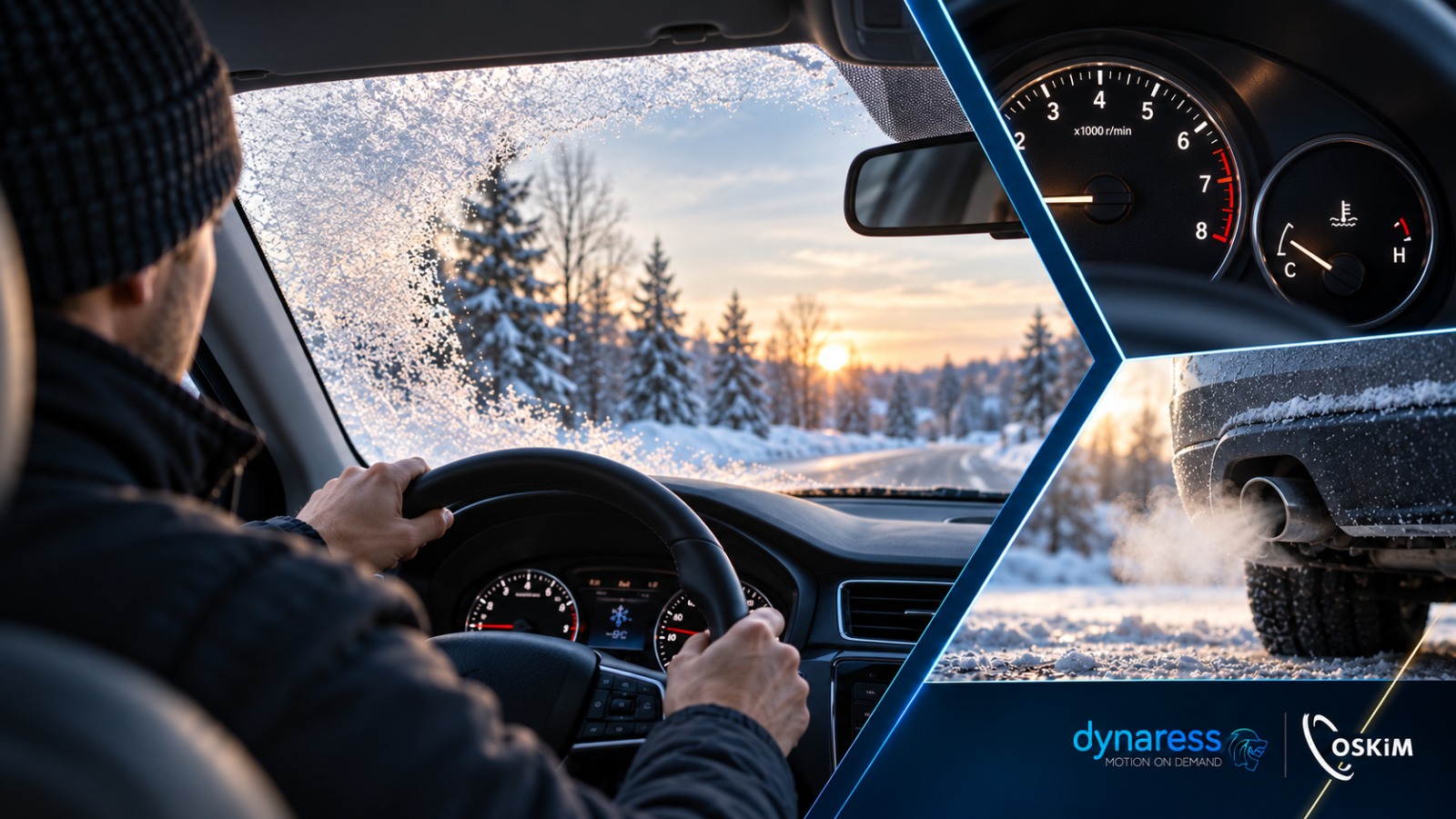
On a cold winter morning, do you start your car and wait a few minutes before driving off? Many drivers believe that waiting for the engine to warm up extends its life and prevents potential faults. Some even make a point of not setting off until the engine temperature gauge starts to rise.
But is this long-standing habit really necessary? Does waiting for the engine to warm up protect it, or are we unknowingly using fuel for no good reason?
The answer is closely related to the engine technology in your car. This practice was once common, but it has largely become unnecessary in modern vehicles. That said, not waiting for the engine to warm up does not mean you should rev it hard as soon as you start it.
Where did the habit of warming up the engine come from?
In older cars, it could be necessary to wait for a while after starting the engine. Cold weather could make it difficult for carbureted engines to mix fuel and air in the correct proportions. As a result, the engine might run unevenly or stall.
Drivers would therefore let their cars idle for a while so the engine could begin running more steadily.
Today, most cars are equipped with electronic fuel injection and advanced engine management systems. These systems monitor engine temperature and operating conditions, then adjust the amount of fuel automatically.
According to technical information published by the U.S. Department of Energy, modern vehicle engines reach their ideal operating temperature more quickly when driven than when left idling for an extended period.
For this reason, there is no need to follow habits that were appropriate for older cars in exactly the same way with today’s vehicles.
What happens inside the engine when it is cold?
The moment an engine is started differs from normal operating conditions. In cold weather especially, the engine oil, fuel system and metal engine components are all at a low temperature.
Cold engine oil has greater resistance to flow. This can increase friction losses inside the engine. When the engine starts, the oil pump begins circulating oil to the moving parts. As the engine warms up, the oil’s flow characteristics change and friction losses decrease.
A scientific study published in 2020 observed that, while a diesel engine was warming up, the oil temperature rose more slowly than the coolant temperature. The study shows that different parts of an engine do not all reach operating temperature at the same time.
This means that a rising temperature gauge on the dashboard does not necessarily mean the engine oil has warmed up completely.
The key point is that being ready to run and having reached full operating temperature are not the same thing. Modern engines can be driven before they are fully warm. What matters is avoiding unnecessary strain during this period.
How long should you wait after starting your car?
Most modern petrol and diesel passenger cars do not need to be left idling for an extended period.
The U.S. Department of Energy’s energy-efficiency resources recommend that, for most modern cars, you begin driving gently about 30 seconds after starting the engine.
This is a short wait that may give the engine time to settle into regular operation and allow the driver to prepare to move. It is not intended to warm the engine fully, and it does not mean that every car must be left idling for exactly 30 seconds.
Vehicle owner’s manuals may also recommend setting off once visibility is clear instead of leaving the engine idling for a long time. This can help the engine warm up faster and reduce unnecessary emissions.
The best approach is to start driving normally after a short time and take it easy during the first few kilometres.
In particular, avoid:
- Accelerating suddenly or aggressively while the engine is cold.
- Revving the engine very high during the first few minutes.
- Putting the engine under heavy load before it is fully warm.
- Pressing the accelerator while the car is stationary to warm the engine faster.
Paying attention to how you drive during the first few kilometres matters more than waiting for minutes to protect the engine.
Does leaving the engine idling for a long time increase fuel consumption?
Yes. As long as the engine is running, the car continues to use fuel even when it is not moving.
According to data published by Natural Resources Canada, idling a car for 10 minutes can use approximately 0.25–0.50 litres of fuel, depending on the vehicle and conditions.
The amount can vary with engine size, outdoor temperature, engine operating conditions and the electrical equipment in use.
The car uses fuel while idling, but it does not cover any distance.
For drivers who wait 5–10 minutes every morning for the engine to warm up, this habit can add up to unnecessary fuel consumption over time.
Idling is also not the most efficient way to warm the engine. Once the car is moving, the engine operates under a controlled load, and the warm-up process is generally faster.
How does warming up the engine while idling affect the environment?
When the engine is cold, fuel combustion conditions and the efficiency of the systems that clean exhaust gases differ from those at normal operating temperature.
The catalytic converter in petrol cars plays an important role in reducing harmful exhaust gases. However, it needs to reach a certain temperature to work effectively.
A scientific study published in 2023, based on measurements from 37 petrol cars, shows that cold starts can have a significant effect on total trip emissions.
The study observed differences in the amount and duration of emissions between warming up an engine at idle and warming it while the vehicle is moving. Since the results vary by pollutant, it would not be accurate to give a single result for all emissions. However, it is clear that cold starts are an important factor in exhaust emissions.
Reducing unnecessary idling can help lower carbon dioxide emissions as well as fuel consumption.
Do you need to warm up the engine in winter?
Cold weather affects engine operating conditions. Low temperatures can change the flow characteristics of engine oil, battery performance and the time it takes for the engine to reach operating temperature.
However, this does not mean that a modern car needs to idle for several minutes on every winter morning.
It is important to distinguish between warming up the engine and ensuring safe driving conditions.
For example, if the windshield is covered in ice or fog, do not set off until you have a clear view. You may need to wait while you clear the glass or use the defrost system. This wait is for safe driving, rather than to protect the engine.
In extremely low temperatures, follow the vehicle manufacturer’s recommendations. Some engines, especially in heavy-duty diesel vehicles, may require different starting procedures.
Diesel vehicles may also have a glow plug system. Its purpose is to help with combustion before the engine starts. If your dashboard has a glow plug indicator, wait for the light to go out before starting the engine. This is not the same as leaving the engine idling for a long time after starting it.
Does driving before the engine warms up shorten its life?
Moving off while the engine is cold does not, by itself, mean the engine will be damaged.
What matters most is how you use the car before the engine reaches operating temperature.
Friction losses may be higher when the engine is cold. For this reason, avoid high engine speeds, hard acceleration and heavy loads until the engine has warmed up.
Another important factor is using the car for very short trips on a regular basis.
For example, if a car is driven only a few kilometres each day, the engine may not reach its normal operating temperature during some trips.
Vehicle manufacturers’ technical documents also note that repeated short trips before the engine has warmed sufficiently can cause condensed moisture and unburned fuel to mix with the engine oil.
For the engine to operate properly, it is therefore important to consider not only what happens immediately after starting, but also the vehicle’s overall usage conditions and compliance with the manufacturer’s maintenance intervals.
What should you do when you start your car in the morning?
A few simple habits can help you set off without leaving the engine idling unnecessarily.
First, start the car and make sure the engine is running normally. While you fasten your seat belt, check your mirrors and get ready to drive, the engine can run briefly.
Then make sure the windows are clear and you have adequate visibility.
After setting off, avoid sudden acceleration and high engine speeds for the first few kilometres. You can return to your normal driving style as the engine warms up.
It is also important to use engine oil that meets the specifications recommended by the vehicle manufacturer. In cold weather especially, the oil’s viscosity must be suitable for the engine’s initial operating conditions.
Finally, do not leave your car running in an enclosed garage. The U.S. Environmental Protection Agency warns that carbon monoxide from the exhaust can reach dangerous levels even when the garage door is open.
Conclusion: What is the best way to warm up an engine?
For most modern cars, there is no need to wait for the engine to warm up completely after starting it.
Although idling for a long time does warm the engine, it is generally slower and uses more fuel than driving gently.
To protect your engine, the best approach is to prepare briefly after starting, set off and drive gently until the engine reaches operating temperature.
Of course, engine technology and manufacturer recommendations vary from one vehicle to another. Follow the owner’s manual, especially for older cars, in extremely cold weather and when using special-purpose vehicles.
In short, how you treat the engine during the first few kilometres matters more than how long you wait before driving.
References
- Lodi, F. et al. (2020). Engine Performance and Emissions Analysis in a Cold, Intermediate and Hot Start Diesel Engine. An experimental study on engine temperature, oil temperature, friction losses and fuel consumption.
https://doi.org/10.3390/app10113839 - Hu, J., Frey, H. C. and Yazdani Boroujeni, B. (2023). Contribution of Cold Starts to Real-World Trip Emissions for Light-Duty Gasoline Vehicles. A study of the effects of cold starts on exhaust emissions from petrol cars under real-world driving conditions.
https://doi.org/10.3390/atmos14010035 - Zhu, S. et al. (2023). A Method to Reduce Cold Start Emissions while Shortening Fast Idle Catalyst Light-off Time. A technical study on fuel combustion during cold starts and the time required for a catalytic converter to reach operating temperature.
https://doi.org/10.4271/2023-01-0247 - U.S. Department of Energy. Idling Reduction for Personal Vehicles. Technical information on idling, engine warm-up and fuel savings in modern cars.
https://afdc.energy.gov/files/u/publication/idling_personal_vehicles.pdf - Natural Resources Canada. Factors That Affect Fuel Efficiency. Information on fuel consumption in cold weather, idling and fuel-efficient driving.
https://natural-resources.canada.ca/energy-efficiency/transportation-energy-efficiency/personal-vehicles/factors-affect-fuel-efficiency - U.S. Environmental Protection Agency. Carbon Monoxide Poisoning: Protect Your Family and Yourself. Official information on the risk of carbon monoxide poisoning from running a vehicle in an enclosed garage.
https://www.epa.gov/indoor-air-quality-iaq/carbon-monoxide-poisoning-protect-your-family-and-yourself-factsheet - Vehicle owner’s manual (2022). Manufacturer instructions on starting the engine, operating a cold engine and warming it up at idle.
Review source document. - Vehicle owner’s manual (2025). Technical information on short trips, engine oil and engine warm-up.
Review source document.