

It is a cold winter morning. You get into your car to go to work and turn the key, but instead of the engine starting, you hear only a short clicking sound. Or, a few minutes after setting off, the windows begin to fog up, the wipers leave streaks across the glass and the tire pressure warning light comes on.
Many problems that occur in winter do not actually appear without warning. Most of them can be identified and prevented with a few simple checks before the weather gets colder. The battery, antifreeze, tires, brakes and visibility-related systems should be among the main priorities when preparing a vehicle for winter.
So, what should you check in your car before winter arrives?
1. Have Your Battery Checked
Cold weather puts additional strain on a vehicle’s battery. As temperatures fall, the battery’s ability to deliver starting power may decrease, while the engine may require more energy to start. This is why a battery that showed no obvious problems during the summer may reveal that it is nearing the end of its service life on the first cold mornings of winter.
The following signs may indicate that your battery needs to be checked:
- The engine takes longer than usual to start,
- A weak or intermittent sound is heard when starting,
- The headlights appear dimmer than usual,
- Electrical equipment operates more slowly,
- The battery warning light comes on.
Measuring the battery’s voltage and starting performance provides a more reliable assessment than simply checking its appearance. The battery terminals should also be inspected for corrosion or loose connections.
2. Check the Antifreeze Level and Freeze Protection
Antifreeze does more than prevent the engine coolant from freezing. It also helps protect the cooling system against rust and corrosion.
If the antifreeze level is low or the mixture is not suitable for the temperatures the vehicle will be exposed to, the cooling system may be damaged in cold weather. For this reason, it is better to have the antifreeze concentration checked instead of simply adding water whenever the level drops.
The following points should be checked:
- Whether the level in the expansion tank is correct,
- The freezing point of the coolant,
- Whether the hoses have cracks or leaks,
- The radiator cap and connection points.
Opening the expansion tank cap while the engine is hot can be dangerous. This check should always be carried out when the engine is completely cool.
3. Check Tire Pressure and Tread Condition
Tire pressure decreases as the air temperature drops. As a result, tires that were correctly inflated in autumn may be used at a lower-than-recommended pressure during winter. Low tire pressure can negatively affect handling, braking distance and fuel consumption.
Tire pressure should be checked:
- When the tires are cold,
- According to the vehicle manufacturer’s recommended pressure,
- Separately for all four tires.
The correct pressure is generally listed on the label inside the driver’s door or in the vehicle owner’s manual, rather than on the tire sidewall.
The tires should also be inspected for sufficient tread depth, cracks, bulges and uneven wear. Driving a four-wheel-drive vehicle does not eliminate the need for suitable tires and adequate tread depth.
4. Do Not Neglect the Braking System
During winter, drivers are more likely to encounter wet, icy or slippery roads. This makes the condition of the braking system even more important.
The brakes should be inspected if the brake pedal feels unusually soft, the vehicle vibrates during braking, a metallic noise is heard or the vehicle pulls to one side.
The inspection should include:
- Brake pads,
- Brake discs,
- Brake fluid,
- Brake hoses,
- The parking brake mechanism.
Brake fluid can absorb moisture over time. This may affect braking performance, so not only the fluid level but also its overall condition should be checked.
5. Check the Wipers and Washer Fluid
Rain, mud, snow and dirt thrown onto the road can significantly reduce visibility during winter. If the wipers leave streaks, make noise or skip across the windshield instead of clearing it properly, they may need to be replaced.
Summer windshield washer fluid can also freeze in low temperatures. Using a winter-grade washer fluid with a suitable freezing point helps protect the reservoir, pump and washer lines.
When checking the wipers, also inspect:
- The wiper blades for hardening or cracks,
- The washer nozzles for blockages,
- The operation of the front and rear wipers,
- The windshield for oil, dirt or residue that may reduce visibility.
6. Check the Headlights and Other Lighting Equipment
Winter days are shorter, it gets dark earlier and foggy conditions are more common. For this reason, properly functioning lights are essential both for your own visibility and for ensuring that other drivers can see your vehicle.
The low beams, high beams, fog lights, brake lights, turn signals and reversing lights should all be checked individually. Dirty or cloudy headlight lenses can also reduce lighting performance.
It is not enough for the lights simply to be working. Incorrect headlight alignment can affect the vision of oncoming drivers and make night-time driving more difficult.
7. Check the Ventilation System to Prevent Window Fogging
One of the most common problems in winter is condensation and fogging on the windows. This is not only uncomfortable; it can directly affect driving safety.
To ensure that the defogging system works properly, check:
- The heater and ventilation settings,
- The air-conditioning system,
- The cabin air filter,
- The air vents directed at the windshield.
Air conditioning is not used only during summer. In winter, it helps reduce humidity inside the vehicle and clears the windows more quickly. If the cabin air filter is clogged, airflow may be reduced and the windows may take longer to clear.
8. Check the Engine Oil, Fluids and Possible Leaks
Engine oil becomes more viscous in cold weather. Therefore, it is important to check both the oil level and whether the oil viscosity recommended by the vehicle manufacturer is being used.
The following fluids should also be checked:
- Engine oil,
- Brake fluid,
- Power steering fluid, where applicable,
- Windshield washer fluid,
- Coolant.
If you notice oil, water or another type of fluid under the vehicle after it has been parked, do not ignore it. A small leak can turn into a more serious problem in cold weather.
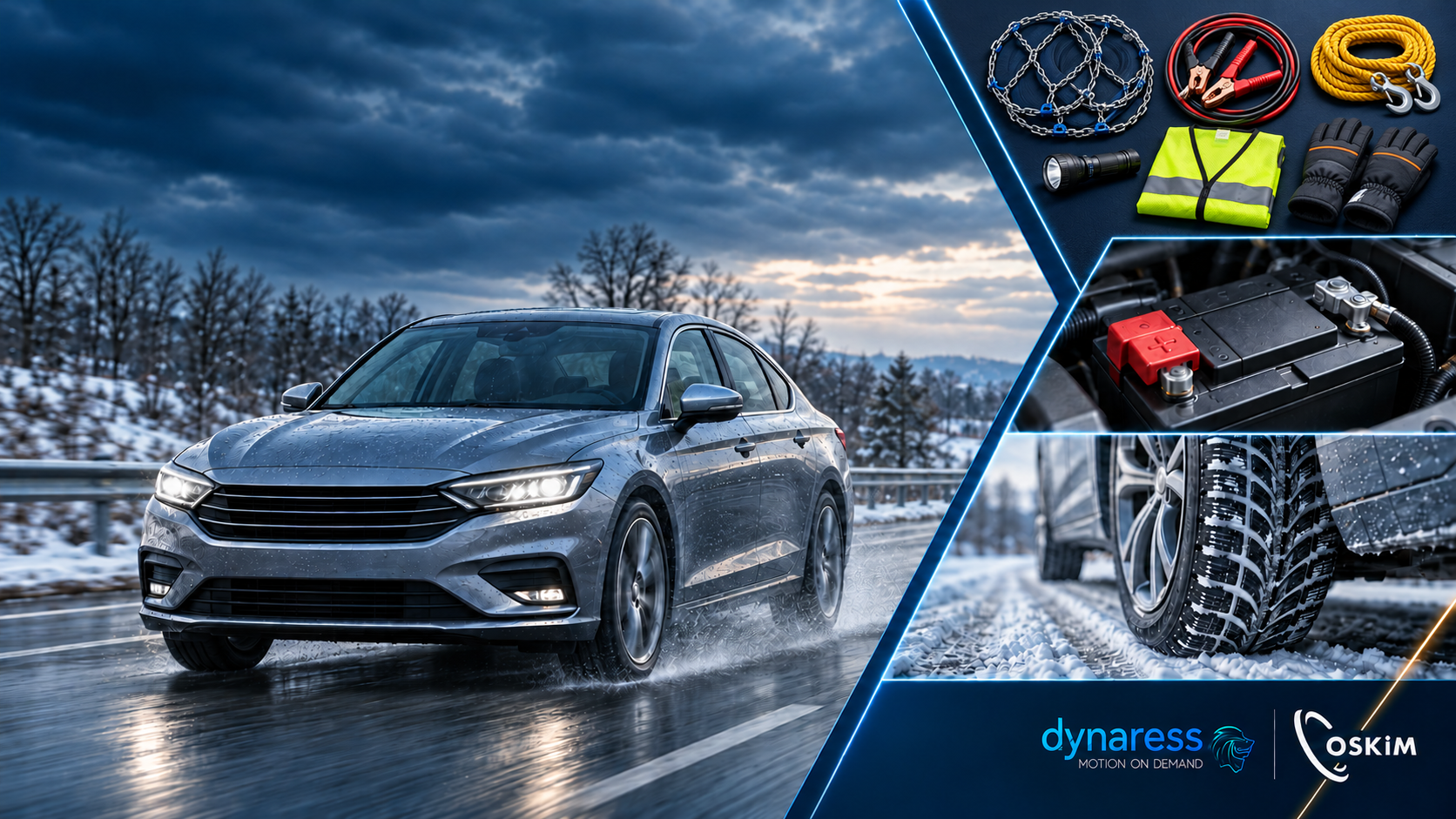
9. Keep Emergency Equipment in Your Vehicle
Winter conditions do not always go according to plan. Having a few basic items in the vehicle can be extremely useful, especially on long-distance journeys or in areas that experience heavy snowfall.
Useful equipment may include:
- A tow rope,
- Jumper cables or a suitable portable jump starter,
- A flashlight,
- A reflective safety vest,
- A first-aid kit,
- A blanket,
- Gloves,
- An ice scraper,
- Snow chains or an approved alternative,
- Drinking water.
You may not need these items every day, but having them available can make a significant difference when an unexpected situation occurs.
10. Carry Out a Final Check Before a Long Journey
Before setting off on a long journey in winter, checking the fuel level alone is not enough. You should also check the weather and road conditions and consider the possibility of snow, ice or heavy rain along your route.
Before setting off, check:
- Tire pressure,
- Battery condition,
- Washer fluid level,
- Wipers,
- Headlights,
- Fuel level,
- Emergency equipment in the vehicle.
These checks take only a few minutes and can help you identify many potential problems before they occur on the road.
Recognize the Warning Signs Before You Are Stranded
If your vehicle takes longer to start in the morning, the tire pressure keeps dropping, the windows fog up more than usual or you hear an unusual noise when braking, have the vehicle checked before you find yourself stranded in winter.
Many vehicle problems give small warning signs before they become serious. The important thing is to notice these signs in time and avoid putting off the necessary checks.
Conclusion
Preparing your vehicle for winter does not always require complicated or expensive work. Checking the battery, measuring the antifreeze protection, adjusting the tire pressure, and inspecting the wipers and headlights are simple steps that can contribute to safer and more trouble-free driving throughout the winter.
Do not wait for the first freezing mornings to prepare your vehicle. Avoiding a breakdown often depends not on finding a solution after a problem occurs, but on carrying out the right checks before the problem begins.
At Dynaress, we continue to share practical information about automotive technology and everyday driving in a clear and accessible way.