

SMED Die Clamps
In production facilities, a die change is not simply a matter of removing the old die and installing a new one. The die must be positioned correctly, clamped securely, and production must resume in the shortest possible time. This is especially true for die changeovers carried out on press lines, where these operations have a direct impact on production time and operational safety.
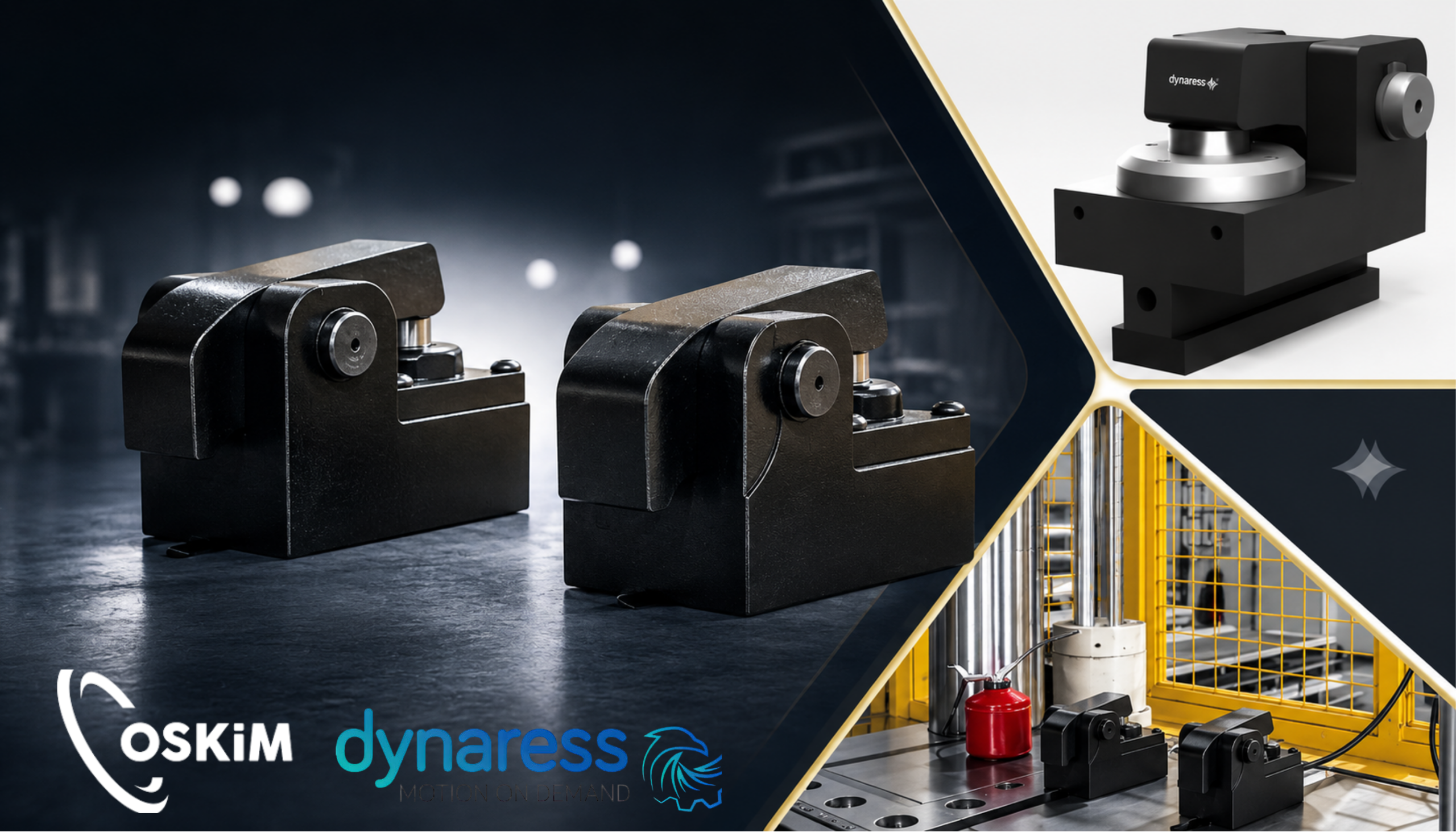
Hydraulic clamps help make die-changeover operations more efficient by securing dies to the press bed with a fast, controlled, and repeatable clamping force.
To review the different clamping-force options in the products developed by Dynaress, you can visit the Dynaress SMED Hydraulic Clamps page. Dynaress SMED products are offered to meet the needs of fast die changeover and secure clamping.
What Is a Hydraulic Clamp?
A hydraulic clamp is a clamping element that uses hydraulic pressure to secure a die, fixture, or piece of production equipment to the machine bed.
The hydraulic pressure within the system engages a piston or a similar motion mechanism. As a result of this motion, the clamp applies force to the die’s clamping surface and helps prevent the die from moving unintentionally during production.
An important point to note here is the tonnage value indicated on the clamp. This value does not represent the weight of the die — it indicates the nominal clamping force generated by the clamp. Selecting a hydraulic clamp requires evaluating not only the weight of the die, but also the forces that may occur during production, the die’s geometry, the clamping points, and the number of clamps to be used.
Why Are Hydraulic Clamps Important?
Traditional die-clamping methods may use bolts, nuts, and mechanical fasteners. While these methods continue to be used in many applications, they can extend operation time on production lines where dies are changed frequently.
The operator has to loosen each connection point individually, position the new die, and retighten the fasteners. Whether the fasteners are tightened sufficiently and evenly can also vary depending on the operator’s experience and the method used.
Hydraulic clamps, on the other hand, help make the clamping and releasing process more controlled. In properly designed systems, clamps can be operated through a shared hydraulic circuit, applying a more balanced clamping force to different points on the die.
The key contributions these systems can provide to production processes include:
- Reduced die clamping and release time
- More controlled and repeatable clamping force
- Reduced manual clamping work for the operator
- Standardization of die-changeover operations
- A contribution to reduced production downtime
- Support for workplace safety and operating ergonomics
- Increased production flexibility on lines with frequent product changes
The extent of these benefits depends on the machine’s structure, the die’s characteristics, the type of clamp used, and how well the system is engineered.
Role in SMED Systems
Hydraulic clamps are one of the key components of fast die-change systems.
SMED stands for Single-Minute Exchange of Die. It is an approach aimed at reducing, as much as possible, the time it takes for production equipment to switch from one product to another. The goal of the SMED approach is to develop methods that can bring die or equipment changeover time down to single-digit minutes.
Fast die changeover is not a process completed simply by using a hydraulic clamp. Depending on the needs of the system, the following equipment can be used together:
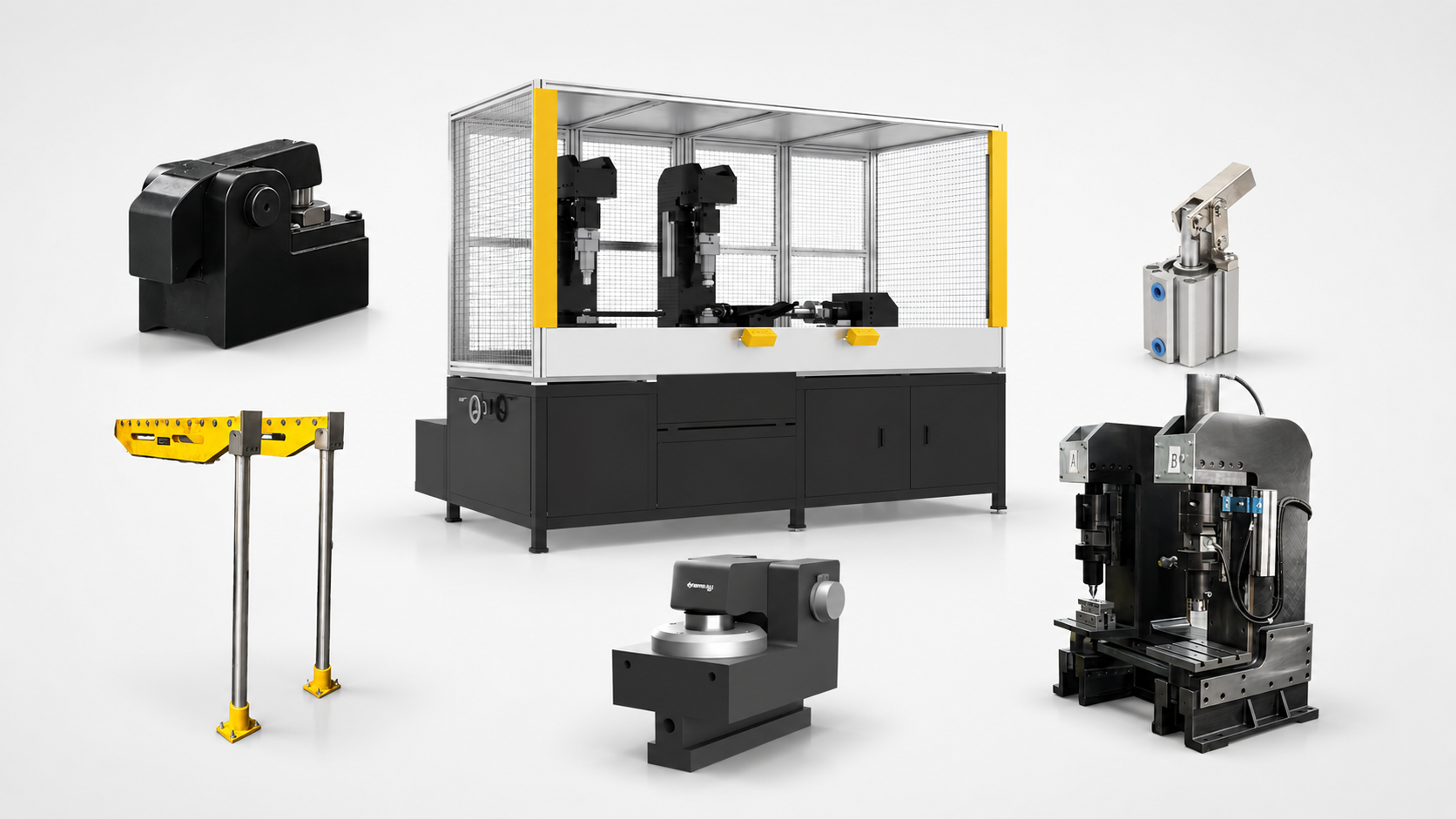
- Hydraulic die-clamping clamps
- Die lifting systems
- Ball-transfer or roller rails
- Die loading and transfer arms
- Die transfer carts
- Hydraulic power unit
- Control panel
- Pressure and position sensors
- Mechanical positioning elements
Die lifting systems raise the die off the bed surface in a controlled manner, allowing it to be moved with less force. Once the die is brought into the correct position, the lifting system is lowered and the hydraulic clamps are engaged. Fast die-changeover systems can generally be implemented as solutions in which automatic clamps, die-lifting equipment, and transfer aids work together.
This integrated structure is intended to make the die-changeover operation not only faster but also more consistent and controlled.
How Do Hydraulic Clamps Work?
The basic operating principle of hydraulic clamps is fairly straightforward.
Pressure generated by the hydraulic power unit is transmitted through hoses and control valves to the piston inside the clamp. As the piston moves, the clamping section of the clamp approaches the die surface and generates the required clamping force.
When the die needs to be released, the hydraulic circuit is operated in the reverse direction, or, depending on the system design, the pressure is released in a controlled manner. This brings the clamp to the open position and allows the die to be removed.
Depending on the application, hydraulic clamps can be manufactured with different motion structures:
- Straight-motion clamps
- Sliding clamps
- Wedge-type clamps
- Rotary or swing clamps
- Special clamps developed for upper and lower dies
The clamp type is determined based on the structure of the press bed, the T-slot dimensions, the die’s clamping surface, the surrounding clearance, and the level of automation.
Safety Considerations
Because hydraulic clamps can generate high clamping forces, safety is an important consideration in system design.
Hydraulic pressure should not be evaluated on its own; monitoring the pressure, verifying that clamping is complete, and taking precautions against possible pressure loss must all be addressed together.
Depending on the application, systems may use the following components:
- Pressure switches
- Position sensors
- Pilot-operated check valves
- Separate hydraulic circuits
- Mechanical locking mechanisms
- Clamping and release position checks
- Safety interlocks with the machine control system
In industrial clamp systems, designs to maintain clamping position in the event of pressure loss, position-monitoring systems, and controlled motion sequences can be used.
Selecting the right clamp is important, but so is engineering the system to be compatible with the machine and the die. Pins, stops, or mechanical positioning elements should be used where necessary to maintain the die’s position. Protecting the clamps from oil, dirt, burrs, and similar contaminants in the production environment should also be taken into account for the system’s service life.
Which Industries Use Them?
Hydraulic clamps can be used across various production environments where dies or fixtures are changed.
Key application areas include:
- Automotive and automotive supply industry
- Sheet metal forming and metal stamping
- White goods (home appliance) manufacturing
- Plastic injection molding
- Rubber and composite part manufacturing
- Forging and hot forming
- Die and tooling manufacturing
- Special machinery and automation systems
In the automotive sector in particular, producing different part types on the same press line increases the importance of die-changeover operations. As product variety and the need for small-batch production grow, running machines for extended periods on a single product is not always practical.
For this reason, fast die-changeover systems are among the equipment that helps a production line adapt to different products in a shorter time.
How to Choose the Right Hydraulic Clamp
A single standard clamp solution may not be suitable for every press and die application. The following information should be evaluated when selecting a system:
- Total clamping force required
- Number of clamps to be used
- Height of the die’s clamping surface
- Die and bed geometry
- T-slot dimensions on the press bed
- Upper or lower die application
- Forces that may occur during production
- The system’s operating pressure
- Ambient temperature and operating conditions
- Need for manual, semi-automatic, or automatic operation
- Position and pressure monitoring requirements
While a clamp’s nominal clamping force is an important figure, it is not sufficient on its own. The placement of clamps around the die, the balanced distribution of clamping force, and the correct mechanical positioning of the die also directly affect system performance.
For this reason, selecting hydraulic clamp systems based on an application-specific technical evaluation is the more appropriate approach.
Speed, Control, and Safety Must Be Considered Together
Hydraulic clamps are simple yet important pieces of equipment that help reduce the time spent on die-changeover operations. When properly engineered, they not only provide fast clamping — they also help production operations run in a more standardized, controlled, and repeatable way.
However, for fast die changeover to be carried out efficiently, the clamp, the die-lifting system, transfer equipment, the hydraulic circuit, and the safety controls must all be evaluated as a whole.
Dynaress offers SMED die-clamping solutions for a range of production needs. To review the different nominal clamping-force options and get information on the right solution for your application, you can visit the Dynaress SMED Hydraulic Clamps product page.