



One of the most practical ways to shorten die changeover time and prevent accidents on press lines
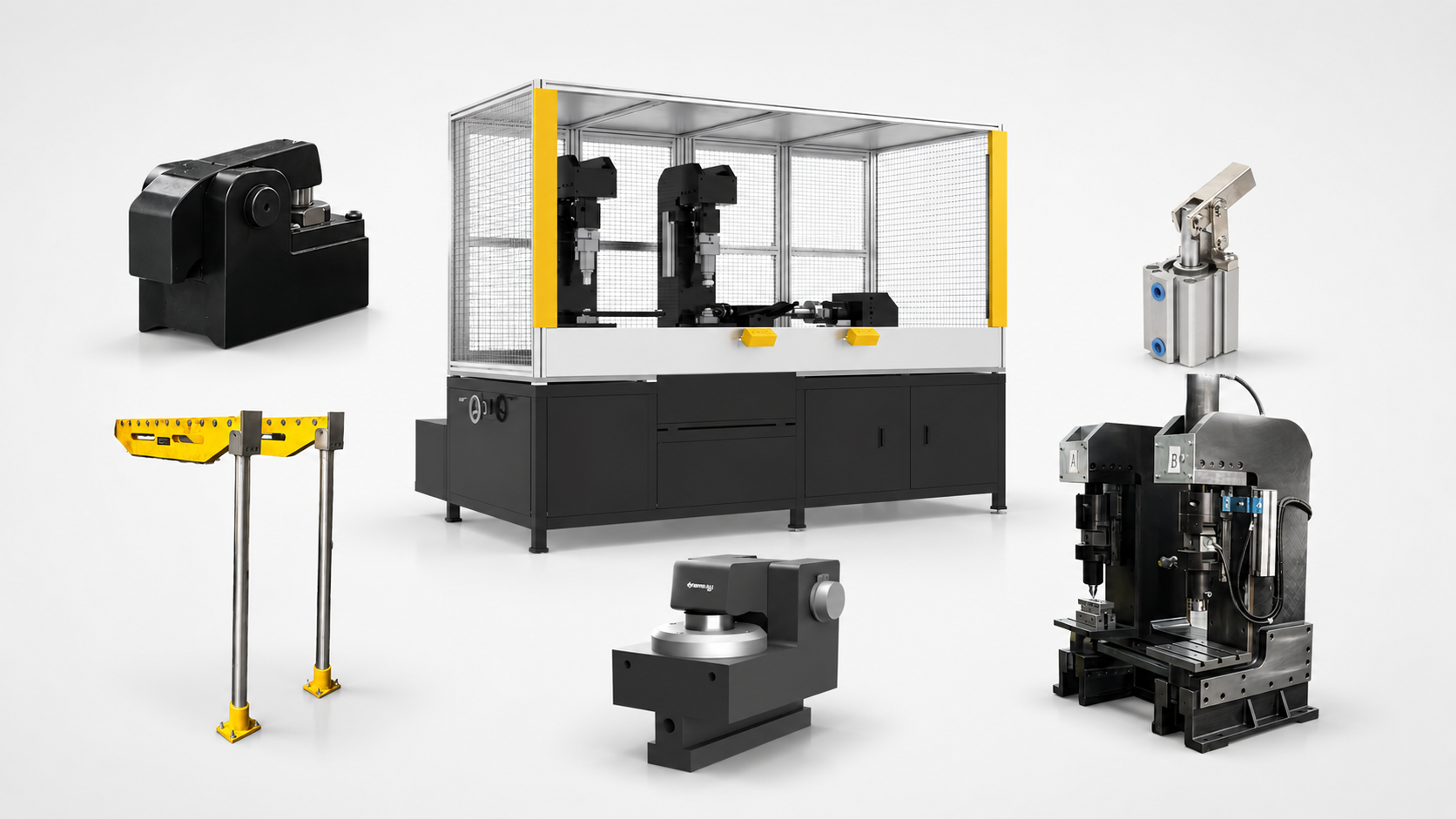
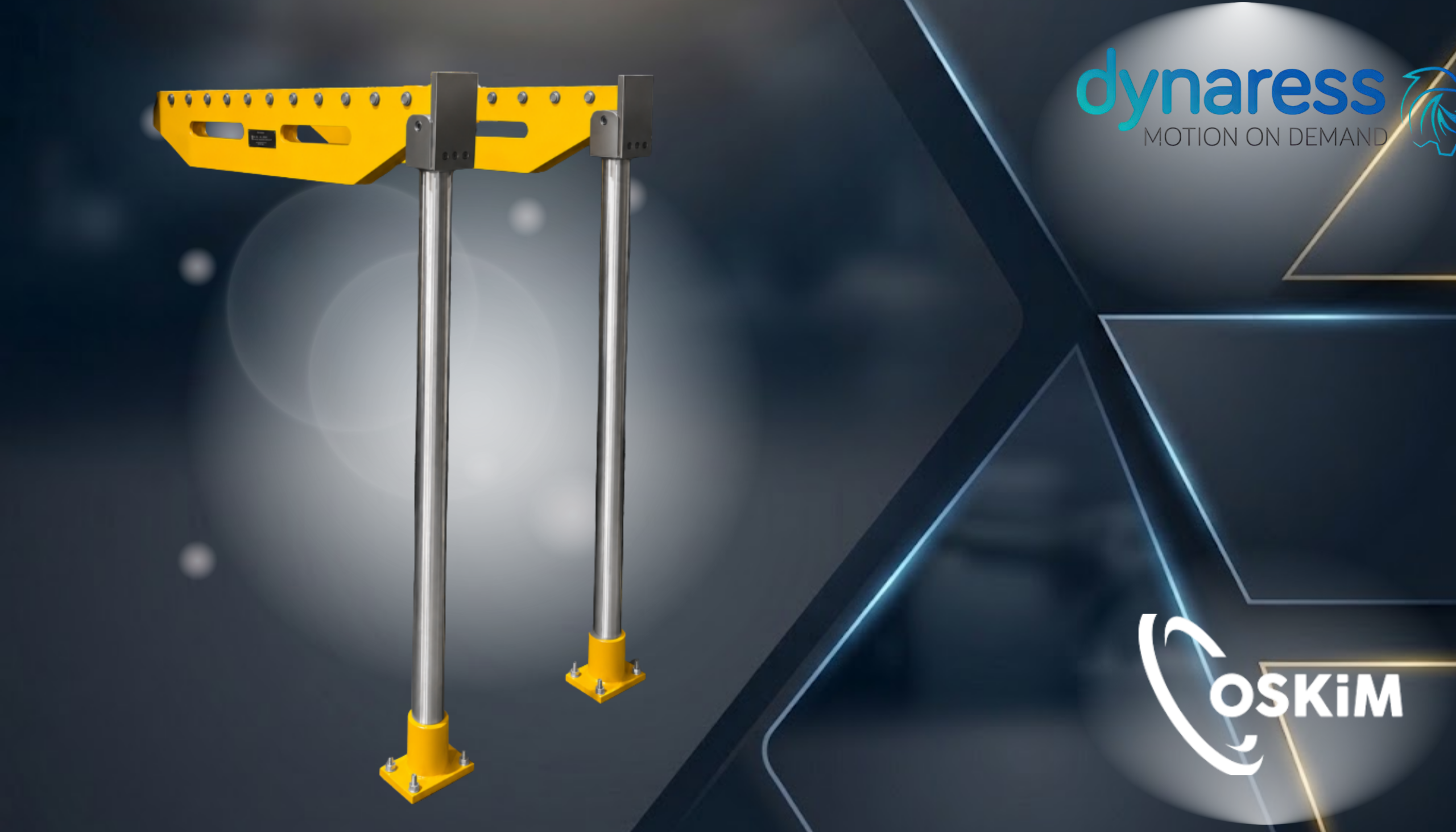
In a press shop, production rarely stops because a machine has broken down. It stops during the interval between removing the die, transporting it, positioning it and producing the first good part. In the automotive supply chain, where this sequence is repeated several times a day, that interval is a direct cost item. This is precisely what the SMED approach targets: turning die changeover into a planned, repeatable and short operation. One of the least visible yet most decisive elements of that transformation is the die loading arm. The SMED equipment and die loading arms manufactured under the Dynaress brand are designed exactly for this purpose.
What is SMED, and where do die loading arms fit in?
SMED (Single Minute Exchange of Die) is a lean manufacturing method developed by Shigeo Shingo within the Toyota Production System, aimed at reducing model and die changeover time to single-digit minutes. The underlying logic is to separate the operations performed during a changeover into internal activities, which can only be carried out while the machine is stopped, and external activities, which can be completed while the machine is still running, and then to shift as many operations as possible into the external category.
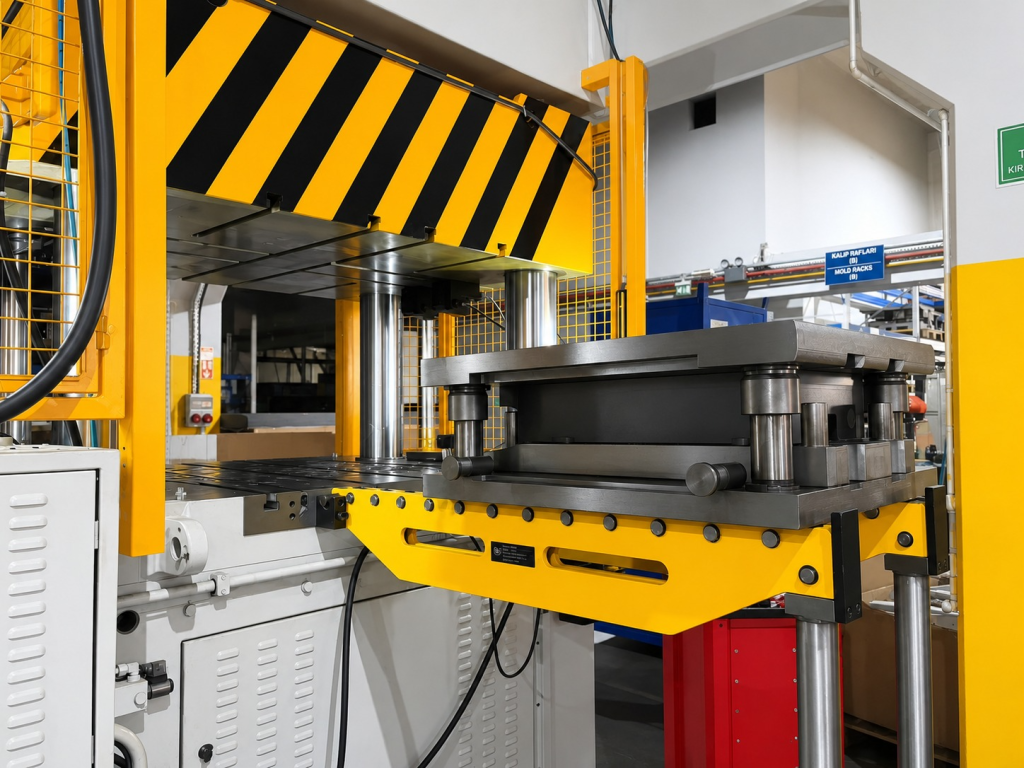
Die loading arms come into play at exactly the point where this distinction becomes useful. The moment a die is lifted out of the press, or just before it is placed into position, it needs a stable surface on which it can be set down safely. The arms hold the die level and balanced at a height where forklift forks can enter without obstruction, slings can be attached securely, and the operator can correct the position without risking a trapped hand. This apparently simple support is what allows preparation work to be completed while the press is still producing.
Why are they so widely used in the automotive industry?
Automotive is one of the sectors where die loading arms are used most intensively. There are several concrete reasons for this.
- High product variety: In a sheet metal forming shop, the same press is used for more than one part reference within a single day. As changeover frequency increases, the annual value of every minute saved grows accordingly.
- Just-in-time pressure: Suppliers working for OEMs face heavy line stoppage penalties. Completing a die changeover within a predictable time frame directly affects the reliability of production planning.
- Heavy, high-value tooling: Automotive dies often weigh several tonnes and represent a significant capital investment. Surface damage caused by a die left unbalanced or set directly on the floor means both repair cost and quality risk.
- Occupational safety and audit requirements: Tipping, sliding and crushing hazards are among the core topics of safety audits in heavy load handling. Using a standard support device is the most direct way of eliminating that risk at the design stage.
Industrial practice shows that die changeover times can be reduced from the order of hours to the order of minutes through a disciplined SMED programme. A significant part of that gain comes not from new capital investment but from standardising the handling and positioning steps.
Concrete benefits of die loading arms
- Provide a safe and clearly defined support surface for heavy dies, preventing them from being set down arbitrarily on the floor or on pallets.
- Make die pick-up by forklift or crane easier; because the fork entry height becomes standard, manoeuvring time and the risk of impact are both reduced.
- Stabilise die loading and positioning, so the operator no longer has to push or force the die into alignment.
- Protect the lower face of the die and its clamping elements from impact, indirectly supporting die life and part quality.
- Improve workplace organisation by allowing dies to be stored at a consistent height and in a defined layout in the tooling storage area.
- Reduce tipping, sliding and crushing risks from an occupational safety perspective.
How to select the right die loading arm
The first parameter governing the selection of a die loading arm is the weight of the die and the location of its centre of gravity. The number and arrangement of the arms must be determined so that the load is distributed evenly and no tipping moment is created. The second parameter is the fork dimensions of the forklifts on site together with the press bolster height; if the arm height is not chosen in accordance with these two values, the time gain that was targeted is lost again in additional manoeuvres.
Beyond this, the contact area between the arm base and the floor, a surface design that prevents sliding, whether the connection to the die is intended to be removable, and compatibility with the stacking arrangement in the die storage area should all be assessed. Manufacturing to application-specific dimensions usually delivers a safer and more economical result than forcing a standard product to fit.
Dynaress SMED equipment
Drawing on the engineering and manufacturing infrastructure within OSKİM Otomotiv, Dynaress produces SMED equipment alongside its special purpose machines, test systems and automation solutions. Die loading arms are dimensioned and manufactured according to the customer’s die weight, clamping geometry and shop floor conditions. For the product range and technical details, please visit the Dynaress SMED Equipment page, or contact our technical team for a solution tailored to your own application.
References
1. Obeya Akademi, “SMED Nedir, SMED Tekniği Nasıl Uygulanır?” — https://www.obeyaakademi.com.tr/smed-nedir-smed-teknigi-nasil-uygulanir/
2. Acadezone, “SMED Nedir? Hızlı Kalıp Değişimi ve 4 Adımı” — https://acadezone.com/blog/smed-nedir
3. Hidkom Mühendislik, “SMED Metodu Nedir? SMED Uygulama Örneği (5 Adım)” — https://www.hidkom.com/smed-metodu-nedir-smed-uygulama-ornegi-5-adim/
4. Journal of Economics and Social Research, “Application of the SMED Method in Setup Time Reduction” — https://dergipark.org.tr/en/download/article-file/916155
5. The Fabricator, “How to implement quick die change” — https://thefabricator.com/stampingjournal/article/stamping/how-to-implement-quick-die-change
6. The Fabricator, “Choosing the right die handling tools” — https://www.thefabricator.com/thefabricator/article/bending/choosing-the-right-die-handling-tools
7. Mazzella Companies, “Lifting and Rigging Solutions for Die Handling and Automotive Stamping” — https://www.mazzellacompanies.com/learning-center/lifting-and-rigging-solutions-for-die-handling-automotive-stamping/
8. Morello, “Die change carts: faster and safer tool handling” — https://www.morello.us.com/die-change-carts-and-heavy-duty-mold-transfer-carts-for-safe-heavy-load-handling/
9. Dynaress, “SMED Equipment Sales” — https://dynaress.com/tr/smed-ekipman-satis/
